1
Height
“Your lawn isn't thirsty. It's short.”
The roots follow the leaves. Mow at the top of the range for your grass and the roots go down where the water is.
TEST A ruler, pushed to the soil, the day after you mow.

FIELD MANUAL · LAWN · BY DALE
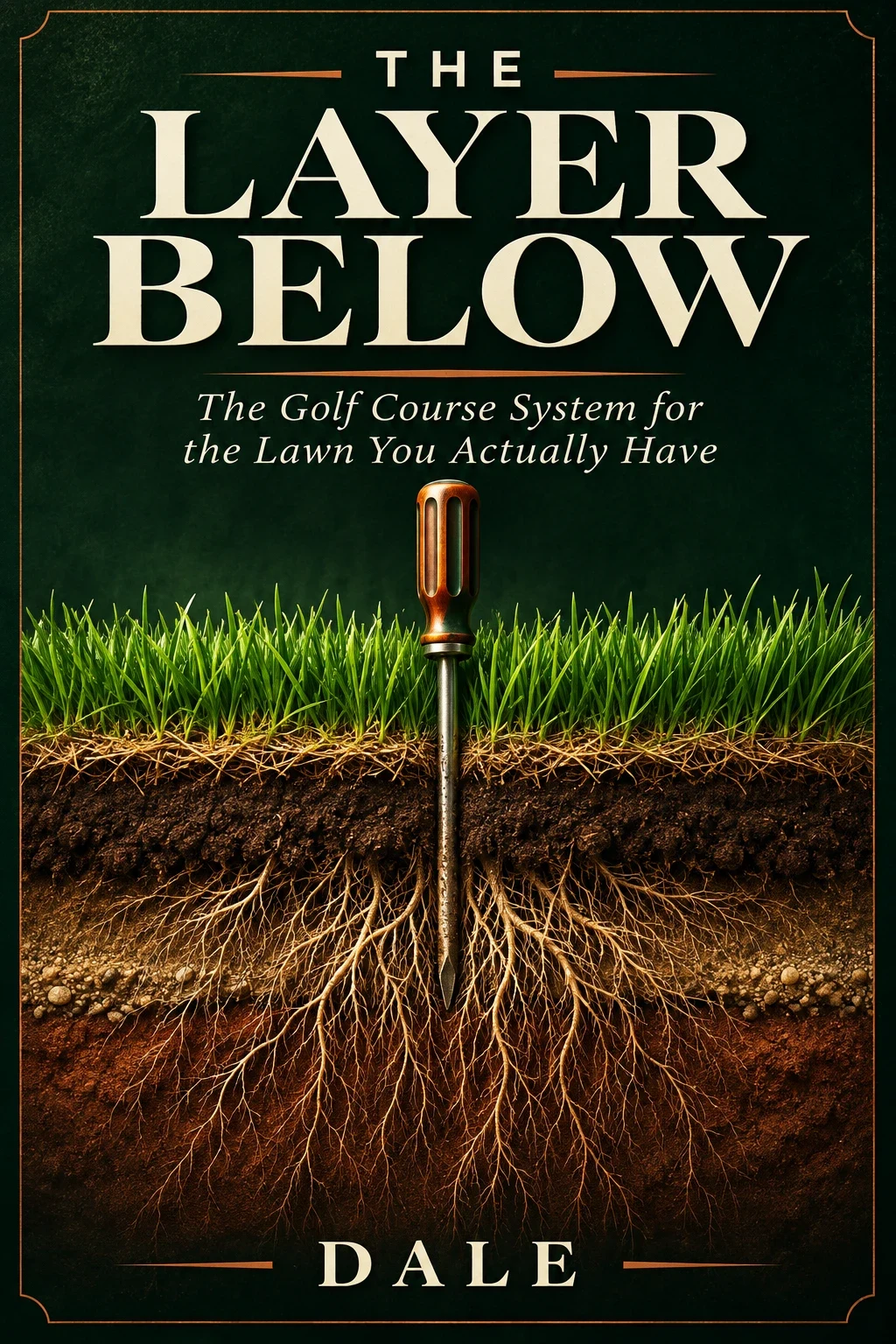
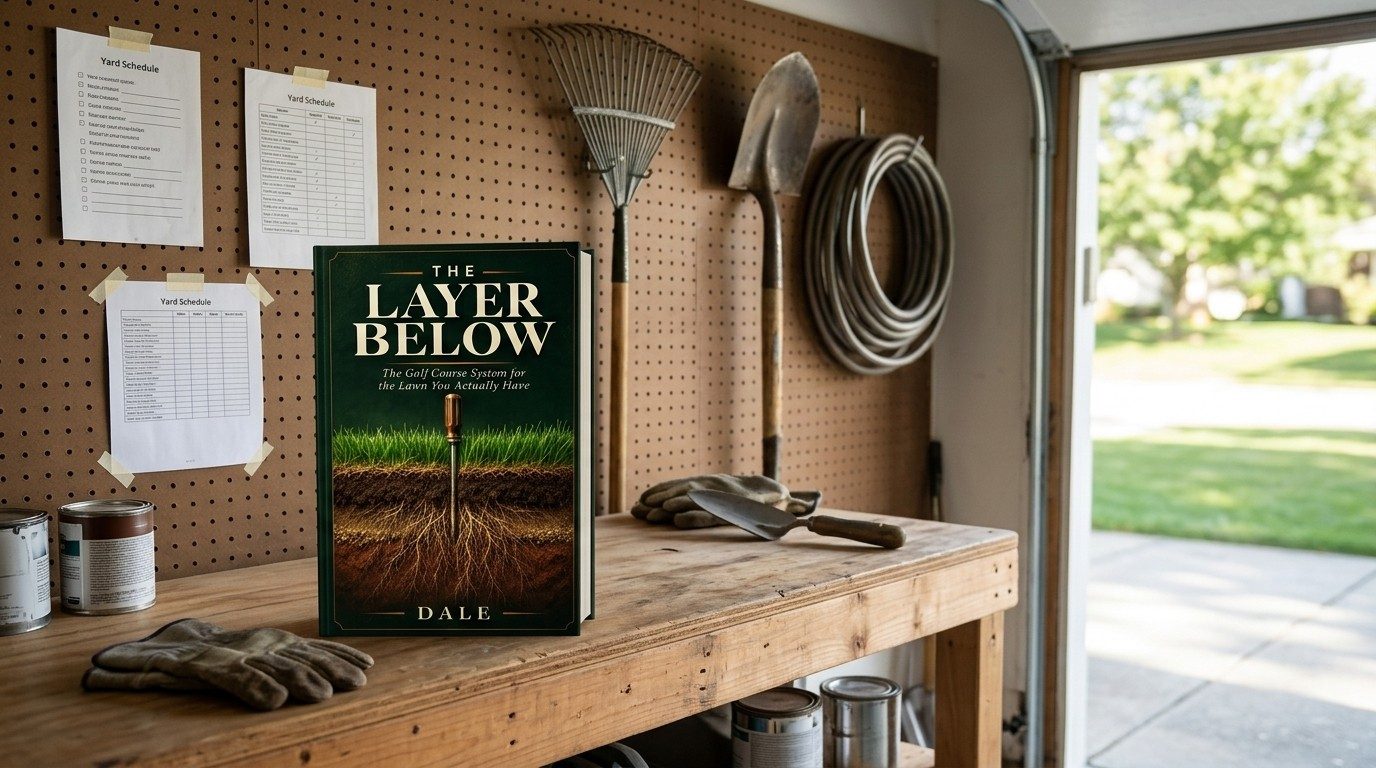
It fails on four things: mowing height, a dull blade, shallow water and packed soil. All four are free to fix. The Layer Below is the system a golf course crew uses, translated for the lawn you actually have.
142 pages · PDF · cool-season and warm-season grass
01 FROM TEN FEET
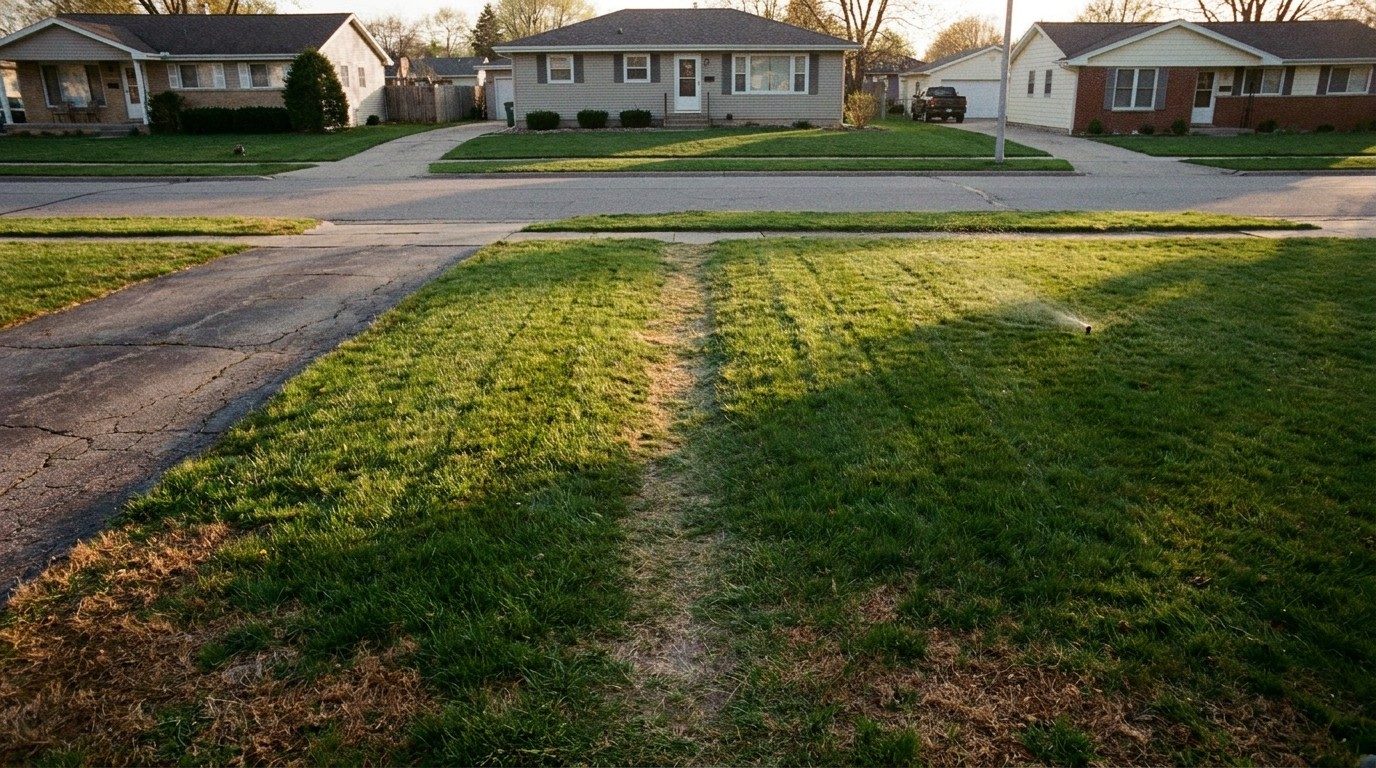
Green is good. Brown is bad. So the fix you reach for is a color fix, a bag that promises green. You have probably bought that bag. The lawn got greener for two weeks, then went back to what it was.
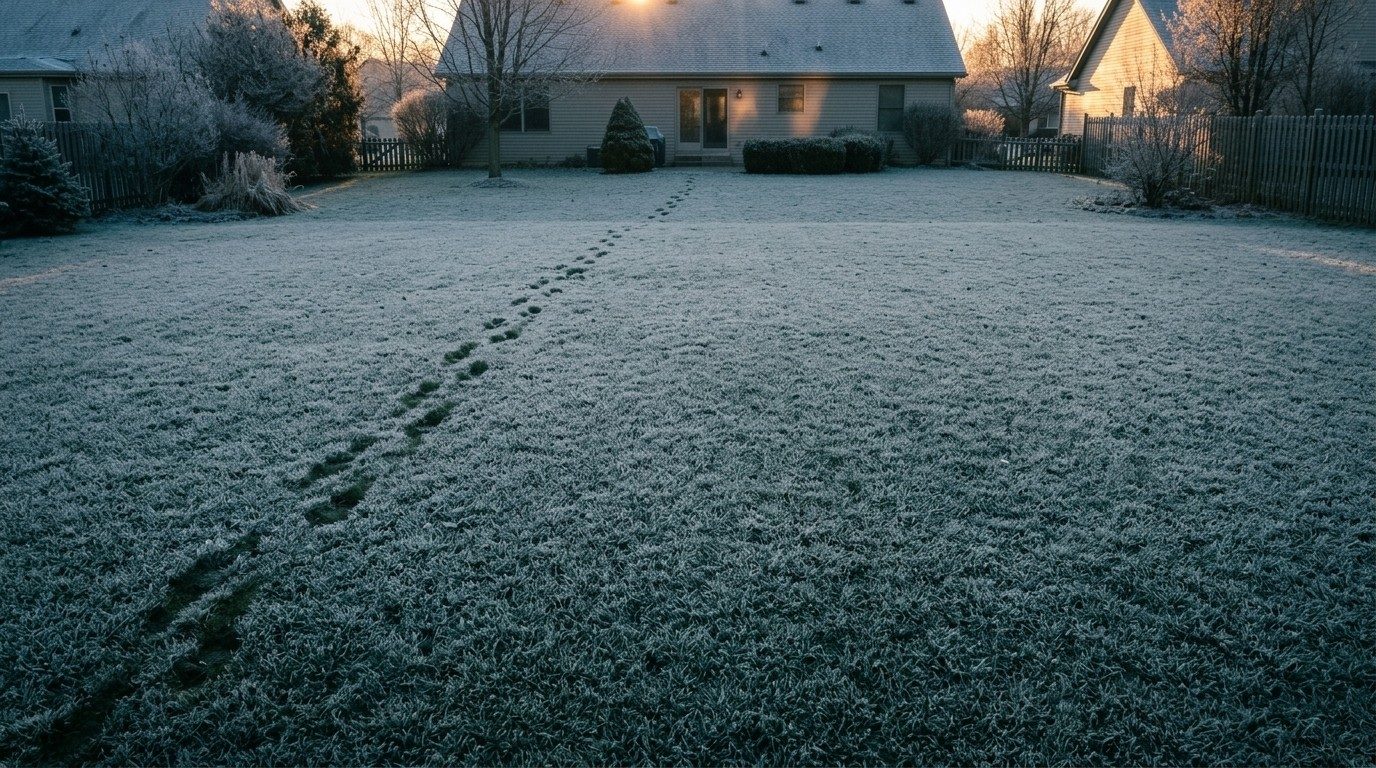
The color is the last thing that happens. Everything that decides it happens lower down: how tall the grass really is, whether the blade cuts or tears, how deep the water goes, and whether the soil lets anything through.
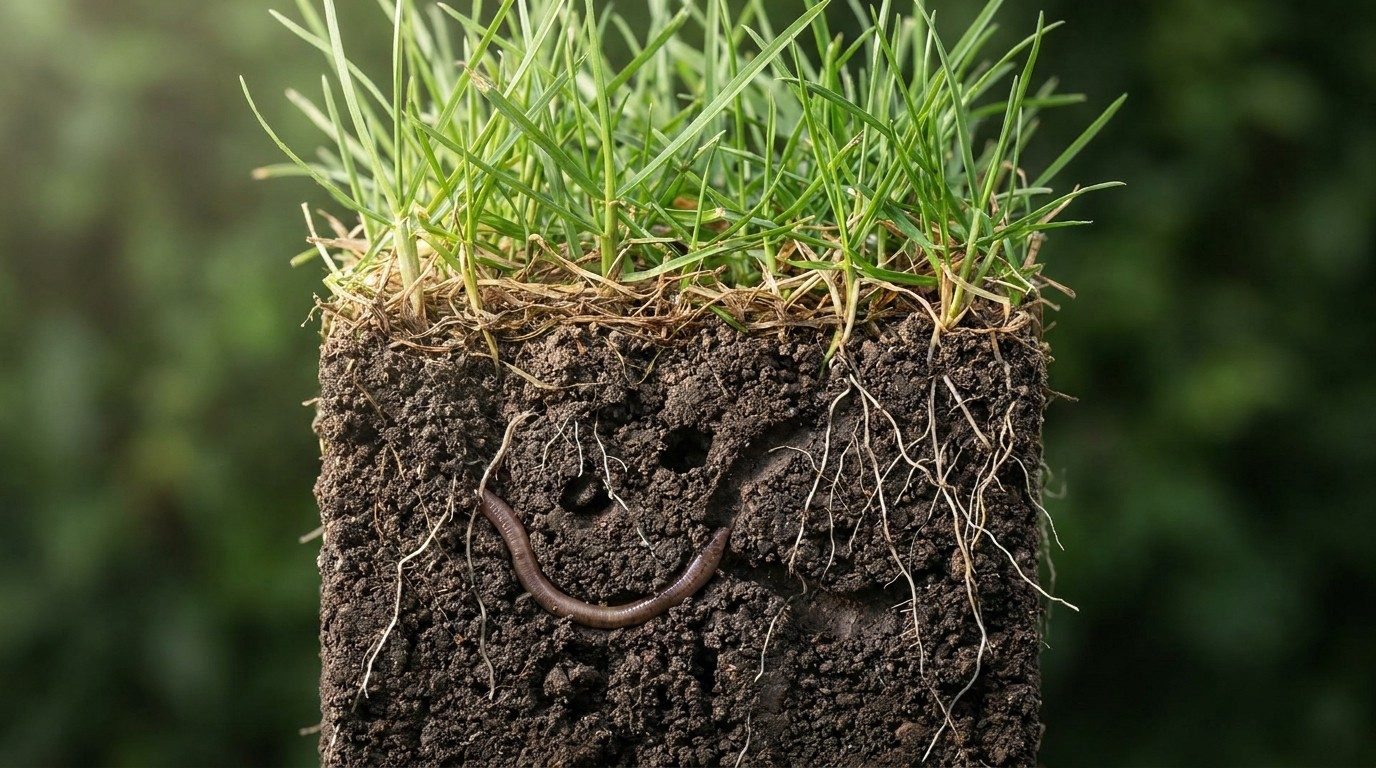
Kneel down, and the lawn changes.
THE LAYER BELOW
Grass, thatch, soil, roots. The lawn you see is decided by the one you don't.
02 THE FOUR FREE FIXES
“Your lawn isn't thirsty. It's short.”
The roots follow the leaves. Mow at the top of the range for your grass and the roots go down where the water is.
TEST A ruler, pushed to the soil, the day after you mow.
“A dull blade doesn't cut, it tears.”
Torn tips dry out pale. From the porch it looks like disease. Up close it is the mower, and every ragged tip is a way in for fungus.
TEST Pull three blades and look at the cut ends.
“Shallow water grows shallow roots.”
Ten minutes every evening keeps the roots in the top inch and the leaves wet all night. Deep, less often, early in the morning.
TEST Tuna cans on the lawn, fifteen minutes of sprinkler.
“Go get a screwdriver and push it into your lawn.”
Packed soil stops water, air and roots. Find the hard spots, move the traffic, and open the soil where it needs it.
TEST A full-size screwdriver, a couple of days after rain.
03 WHAT DO YOU SEE?
CHECK FIRST
· A first check, not a verdict.
04 THE EBOOK
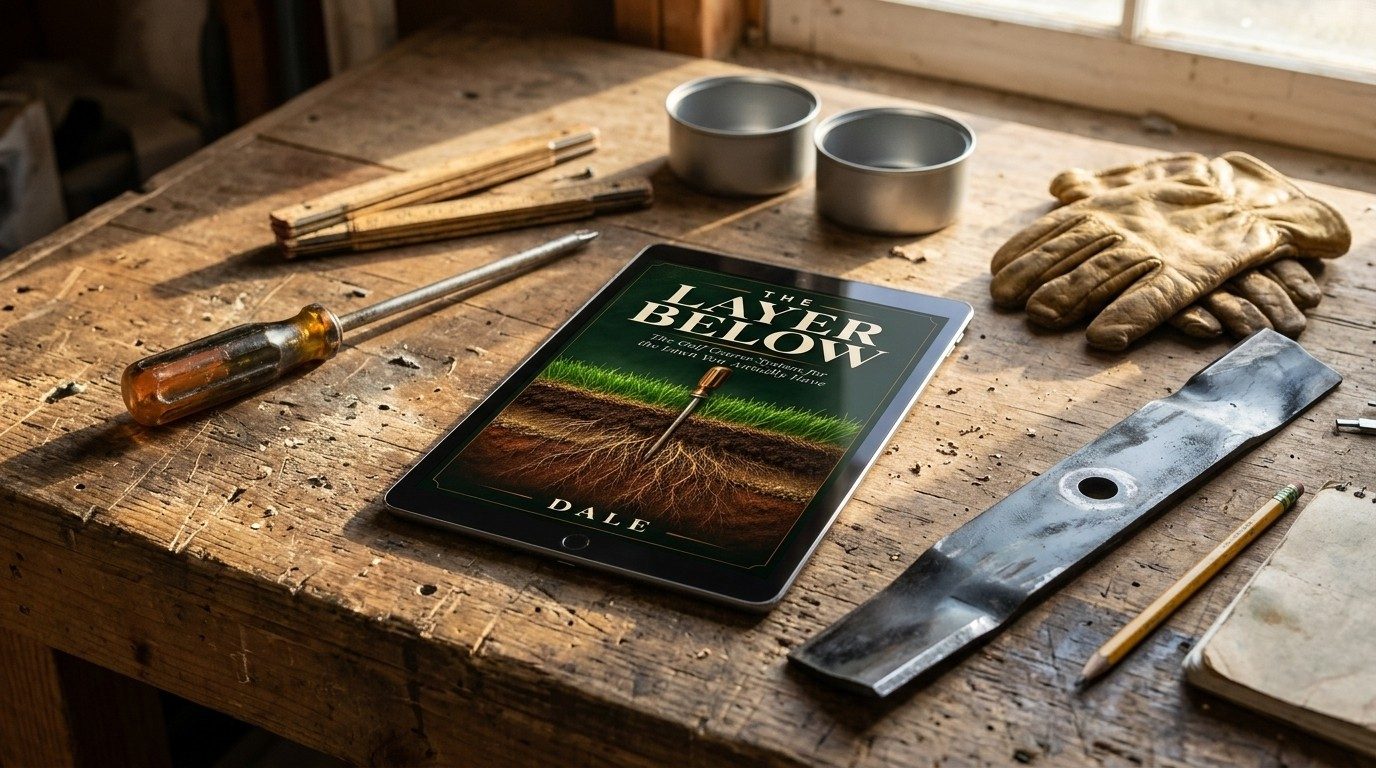
Thirty seconds can't hold the order of operations, the timings or the calendar. This can. Twenty-six chapters, every number given for cool-season and warm-season grass, every fact sourced in the notes.
$19.99
PDF · 142 pages · instant download
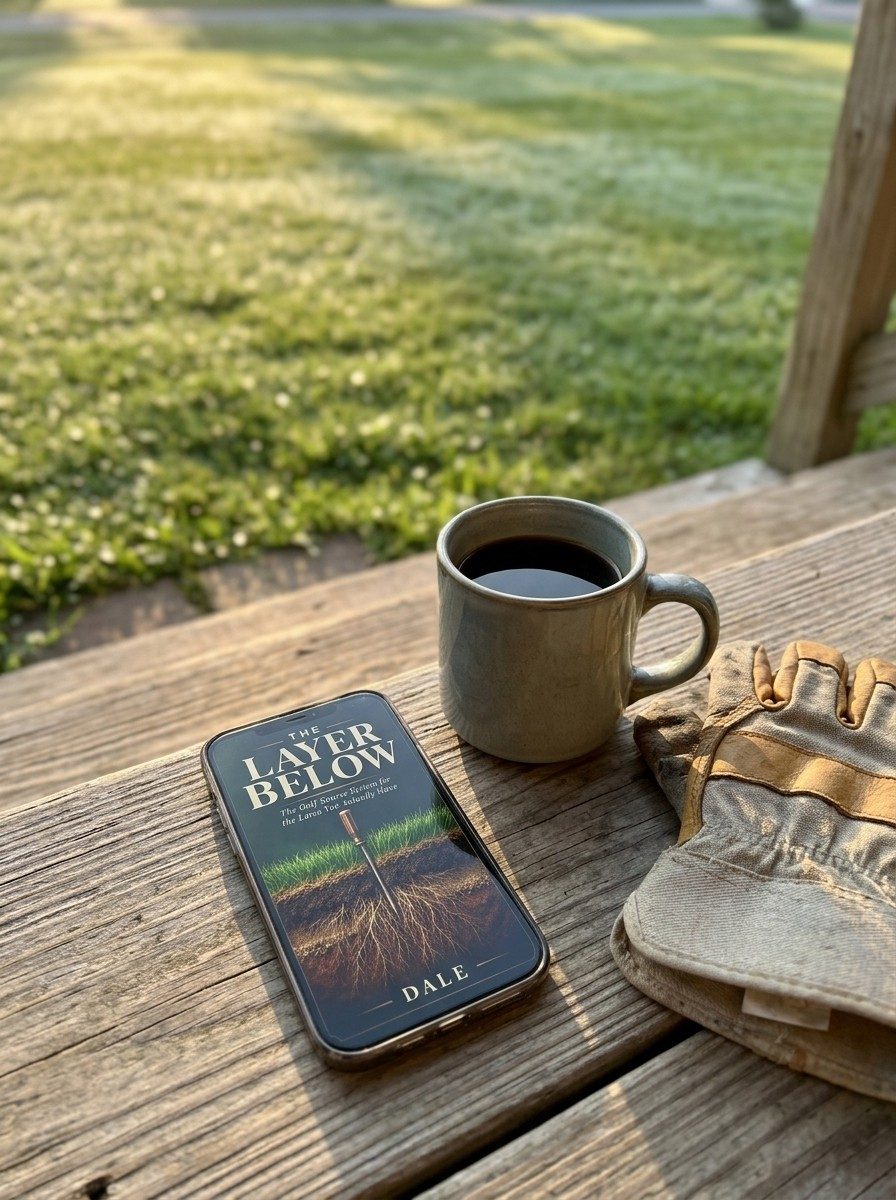
Secure Gumroad checkout · reads on phone, tablet and computer, and prints at home.
Not sure yet? Read Chapter Ten, “The Screwdriver Test,” free.
05 EVERY CHAPTER, THE SAME SHAPE
Why Your Lawn Isn't Working
Know What You've Got
The Four Free Fixes
Feeding It
Fixing What's Broken
The Year
What We Actually Do on the Course
At the back: the order of work, a what-you-see diagnosis table, starting from bare soil, mowing heights, seeding windows, every test on one page, the year on one page, a nitrogen budget, a lawn log, a glossary, and notes listing where every number comes from.
06 FOR WHICH LAWN
Tall fescue and bluegrass grow in spring and fall. Bermuda, zoysia, St. Augustine and centipede grow in the heat. The right answer for one is often wrong for the other, so wherever it matters the ebook gives both, and says when your local extension office knows better.
No brand names, no product rates, no miracle bag. Practice, timing and a few cheap tests.
07 WHO IS DALE
Dale is a greenkeeper. His job is turf cut short, walked on by hundreds of people a day, that has to look right every morning of the year. That doesn't happen with a miracle product. It happens with the same basic jobs, done right, every day, and measured.
He doesn't tell you what to buy. He tells you what the crew does on the course, and the version of it that works in your yard.
Dale is a fictional narrator created for this ebook and its videos. The practices and the sources are real.
08 QUESTIONS
The ebook covers the common American lawn grasses: tall fescue, Kentucky bluegrass, perennial ryegrass and fine fescues, and bermuda, zoysia, St. Augustine and centipede. Chapter Two shows you how to tell which one you have. Where a number depends on the grass or the region, both are given.
No. The tests use a ruler, a screwdriver, a few tuna cans and a thermometer. Some lawns need a rented core aerator, and the ebook tells you how to know whether yours is one of them.
Both. It starts from "what grass do I have" and goes as far as a nitrogen budget by species. Each chapter stands on its own, so you can start with the problem you have today.
No. It gives no pesticide or herbicide rates and names no brands. It shows you why weeds and disease got in, how to change that, and when to call your extension office or a licensed professional.
A 142-page PDF, delivered right after checkout through Gumroad. It reads on a phone, tablet or computer, and the checklists and lawn log print on regular paper.
THIS SATURDAY
Then read the chapter that goes with what you find.
Get the ebook · $19.99